

about the project.
Advise was envisioned as a complete ad-tech platform for broadcasters using NextGenTV/ATSC 3.0. The platform aimed to help advertisers run targeted, interactive TV ads while preserving the seamless, lean-back nature of television.
This case study focuses on the first design phase: the advertiser configuration layer and the TV rendering experience that adapts programmatic ads for the living-room screen.
TV as a medium in transition.
With ATSC 3.0, television is moving from a one-way broadcast medium into an internet-enabled platform. This creates a new advertising opportunity: targeted, interactive, and programmatic ads on the largest screen in the home.
The product opportunity
Deliver targeted, programmatic ads on TV
Enable interactivity on the largest screen in the home
Open TV advertising to local and mid-scale businesses
The missing UX layer
The missing layer was experience design.
Programmatic ad systems were built for web and mobile behaviors: clicking, scrolling, tapping, and active browsing. TV behaves differently. It is passive, shared, remote-controlled, and interruption-sensitive.
problem framing.

Experience Gap
Existing TV ad experiences often felt like they were borrowed from digital screens. They appeared as hard interruptions, disconnected overlays, or dead-end messages with no meaningful interaction.
System Gap
Advertisers provide fixed ad creatives, often based on external/IAB standards. The product could not redesign every ad asset. It could only control how those assets were rendered, placed, blended, and interacted with on TV.
User attention across an ad break
TIME
strategic opportunity.
This product sits at the intersection of:
- Broadcast infrastructure
- Digital ad ecosystems
- Emerging interaction paradigms on TV
Value Creation
product architecture.
The product was designed as a dual-sided system.
ADVERTISER PLATFORM
The backend configuration layer where advertisers and media buyers set up campaigns, targeting, ad tags, and deployment logic.
TV EXPERIENCE LAYER
The frontend rendering and interaction layer where third-party creatives are adapted into TV-native ad experiences.
The advertiser platform defines what should run. The TV experience layer defines how it should appear and behave for viewers.
advertiser configuration layer.
The backend layer established the campaign and inventory logic needed to make ads configurable: ad spaces, targeting presets, delivery settings, key values, pricing, and protection settings.
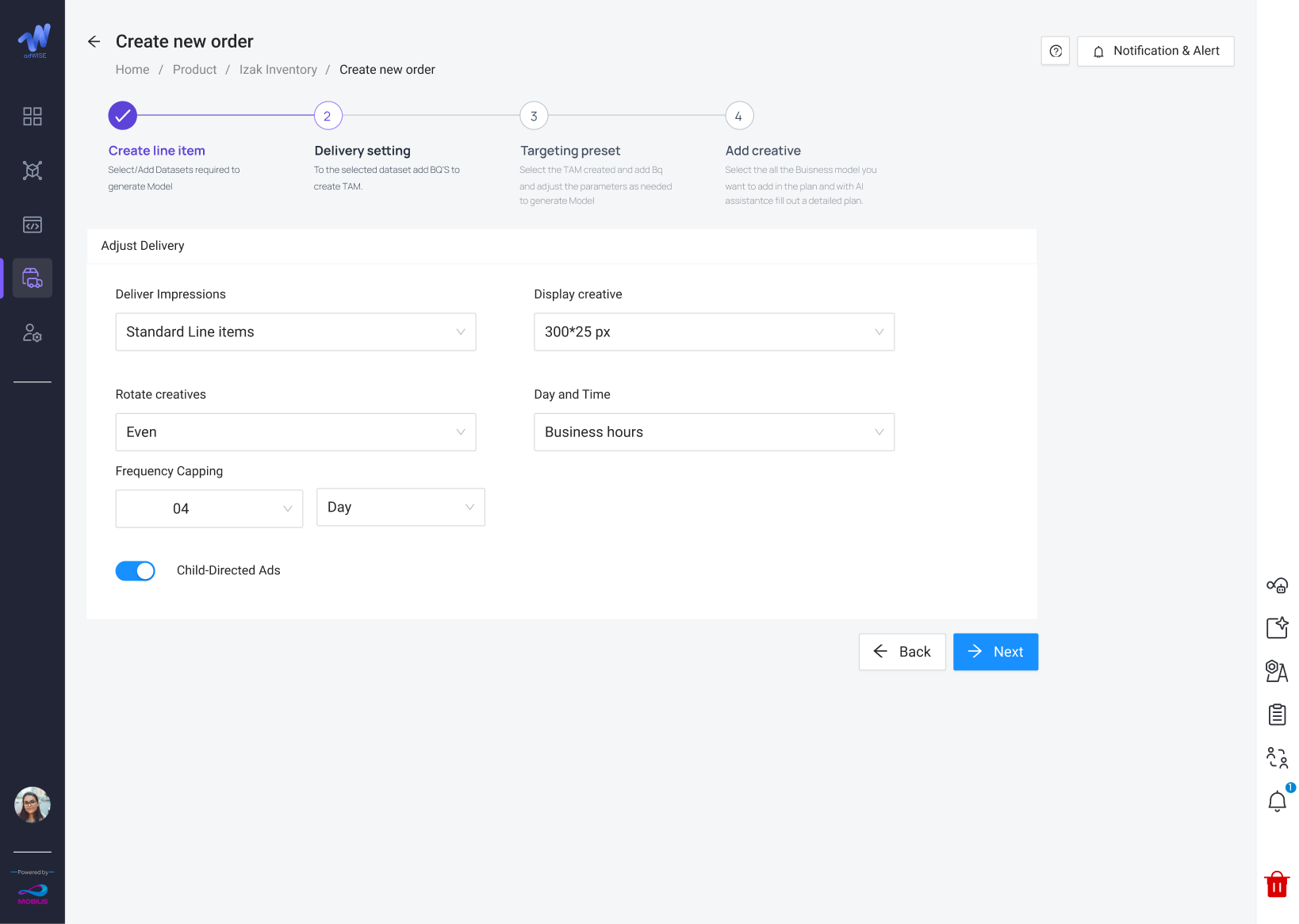
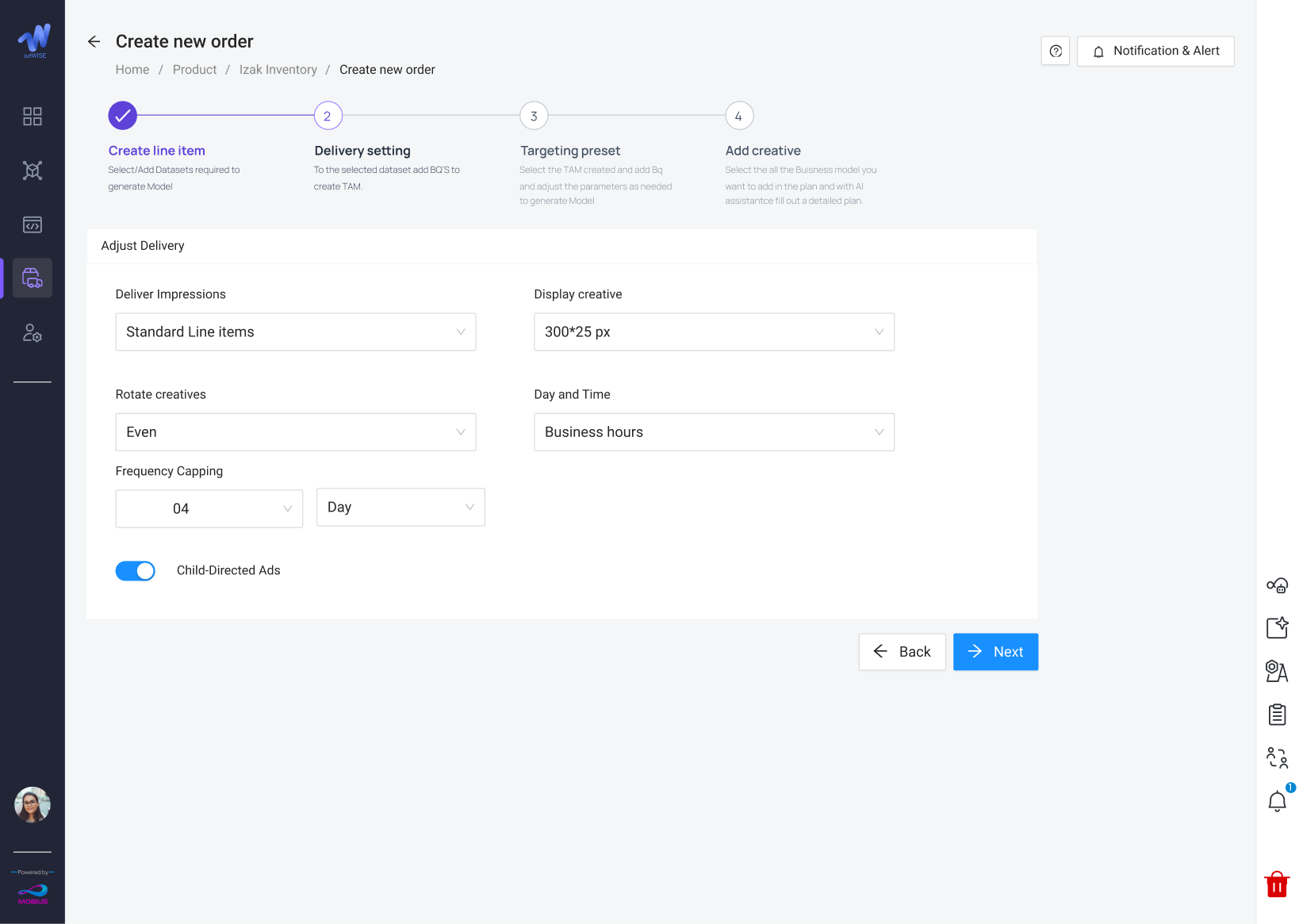
Defines how the campaign is delivered: creative rotation, delivery pacing, frequency capping, child-directed ad settings, display size, and day/time rules.
Creates the sellable ad space by defining ad unit details, key values, and reporting dimensions that connect backend inventory to campaign delivery.
rendering solution.
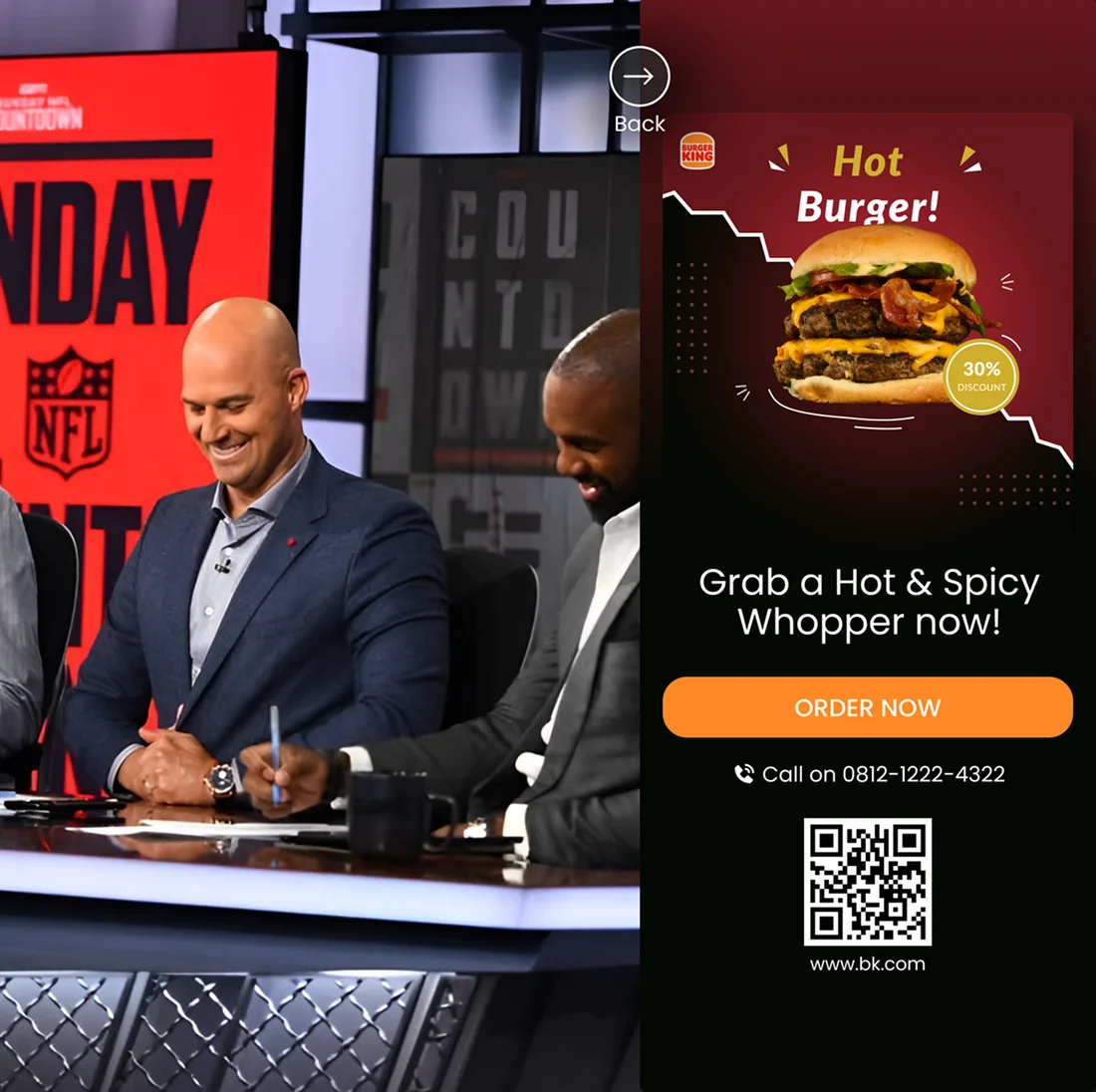
Standard banner ads do not naturally belong inside a TV frame. When placed directly over content, they feel like foreign overlays: visually detached, hard-edged, and disruptive.
The challenge was to preserve advertiser-supplied creative while making the final render feel integrated with the broadcast experience.
Rendering constraints
- The ad creative could not be redesigned because it came from external/IAB-standard assets.
- The render had to feel native to TV without interrupting the broadcast frame.
- The interaction had to work through remote focus states, not touch or cursor input.
PROBLEM
Banner ads on TV behave like:
- Foreign overlays
- Hard-edged visual interruptions
- Detached from content
SOLUTION
Extended Panel Rendering System
Instead of displaying ads as isolated units:
- Extract dominant/background color from the ad
- Extend it into a full-width panel
- Blend the ad into the broadcast frame
IMPACT
- Eliminates “sticker effect”
- Creates visual continuity
- Preserves immersion without modifying ad creatives
The color extraction step reduced the visual clash between advertiser-supplied creative and broadcast content, making the ad feel intentionally composed rather than pasted onto the screen.
interaction model: designing for a passive medium.
TV interaction is unlike web interaction that we are used to designing for. Viewers are far from the screen, using a remote, often in a shared environment. That meant every ad interaction had to be glanceable, optional, and easy to dismiss.
Constraint Space
- No touch, no cursor
- D-pad navigation only
- Lean-back user behavior
Design Principles
- Interaction must be optional
- Engagement must be low-effort
- Ads must never hijack attention
Interaction patterns
CONTEXTUAL ADS


COMPANION ADS


INTERACTIVE ADS

system design thinking.
The goal was to define a repeatable rendering behavior that could work across many advertiser-supplied creatives.
Scalability
- Works across all IAB-compliant creatives
- No manual customization required
Consistency
- Unified rendering behavior across formats
Adaptability
- Supports multiple ad types without redesign
Trade-offs Navigated
Constraint → Design Response Map
impact.
Product Impact
Defined a TV-first ad rendering and interaction model for programmatic broadcast advertising.
Business Impact
Created a foundation for broadcasters to package targeted, interactive ad inventory for advertisers and local businesses.
User Impact
Reduced the perceived intrusiveness of ads by making interaction optional, remote-first, and visually integrated with content.
what makes this work distinct.
- Designed for a new and undefined medium
- Solved a system-level UX problem, not just UI
- Worked within hard constraints: fixed ad creatives, remote input, and lean-back behavior
- Defined how programmatic ads could feel native to TV.
my role.
I led the product design for the first phase of Advise, working across both the enterprise advertiser platform and the consumer-facing TV experience layer.
My main contribution was defining how programmatic ad logic could translate into TV-native rendering and remote-first interaction patterns.